Method layer
CAPE Framework
Organizes the sequence of work and the feedback loop without creating a second platform architecture.
Resources · Frameworks & Infographics
This curated resource pairs each visual with the decision it supports, the operating context it belongs in, and a clear next action. The first framework is CAPE: a five-stage continuous-improvement loop used across Good Combinator Forge.
Featured framework
Good Combinator Forge is built on the CAPE Framework. The method organizes how work moves; it does not replace the platform’s shared capabilities or the 12 cluster contexts that configure them.
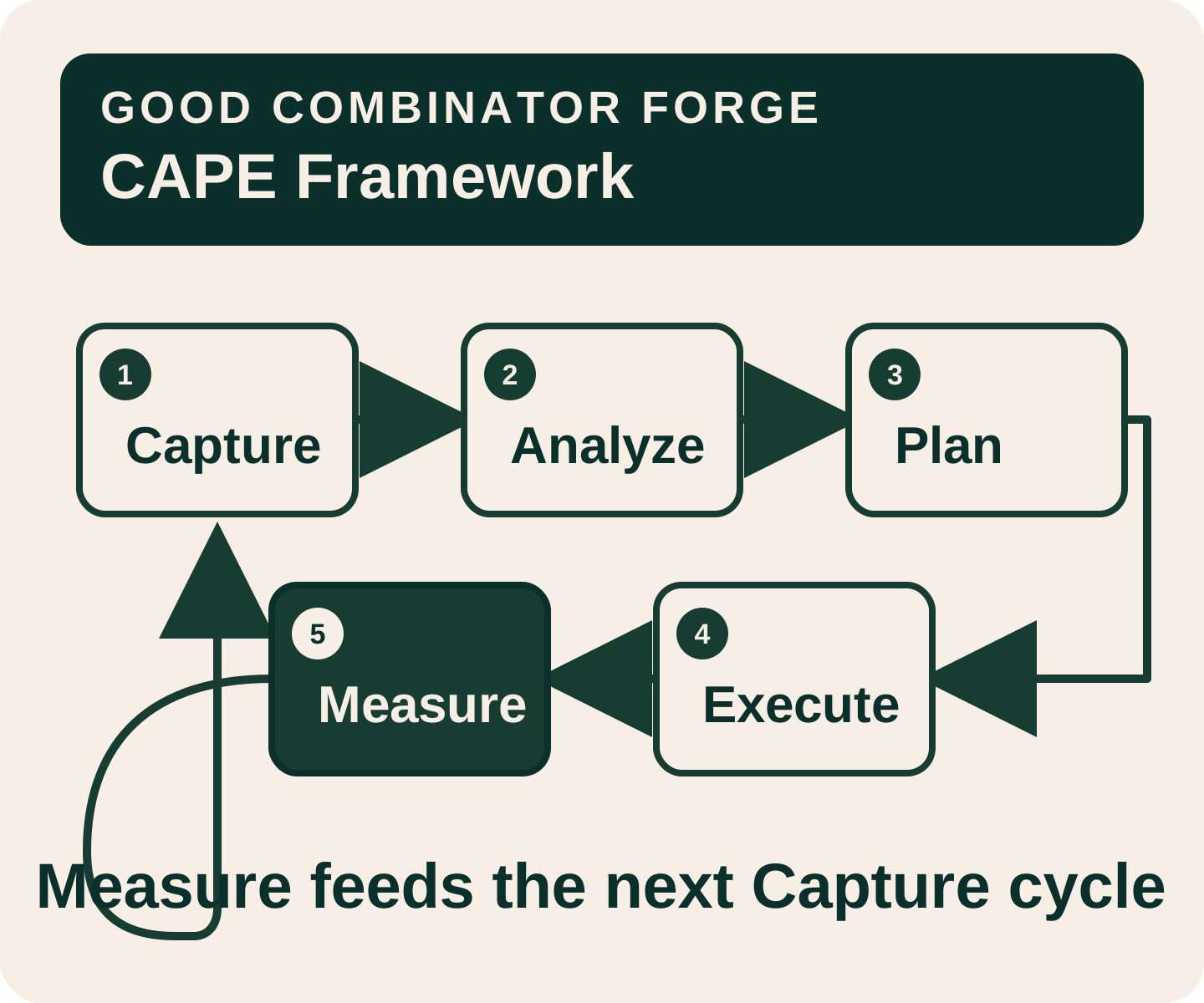
Collect uploads, notes, records, and source evidence with progressive intelligence and human approval.
Use structured analysis templates with conversational assistance, evidence links, and visible uncertainty.
Start with a clear roadmap, then reveal dependencies, risks, and alternatives as the work deepens.
Use human-in-the-loop automation with explicit approvals, audit trails, checkpoints, and recovery paths.
Connect operational dashboards, management trends, and executive recommendations back to evidence.
Capture, Analyze, Plan, and Execute form the memorable action sequence. Measure closes the loop, tests whether the work created value, and informs what should be captured next.
Architecture fit
CAPE is a lifecycle overlay. The platform’s seven shared capabilities supply identity, evidence, workflow, integrations, AI, analytics, and related services. Cluster pages apply the lifecycle to a specific operating context.
Method layer
Organizes the sequence of work and the feedback loop without creating a second platform architecture.
Shared platform
Provide reusable contracts, evidence, workflow, security, integrations, agents, and measurement.
Applied context
Configure the audience, evidence, policies, workflows, offers, and measures for each domain.
See CAPE in context
These cluster pages use smaller CAPE callouts to connect the common method to their specific evidence and operating needs.
Move from source evidence to analysis, a bounded sprint, and measurable reproducibility.
Coordinate shared context, owners, approvals, work, and review trails.
Turn recurring friction into reusable, governed, and measured infrastructure.
Connect venture signal to milestones, accountable execution, and customer learning.
Use the framework
Identify the missing input, decision, owner, action, or measure. Then use CAPE to reconnect the complete loop.